Ty Cobb Beat a Man in the Stands. Then His Whole Team Went on Strike
- New York and Philadelphia, 1912
- 11 min film
- Published
Liked it? There’s a new story every week.
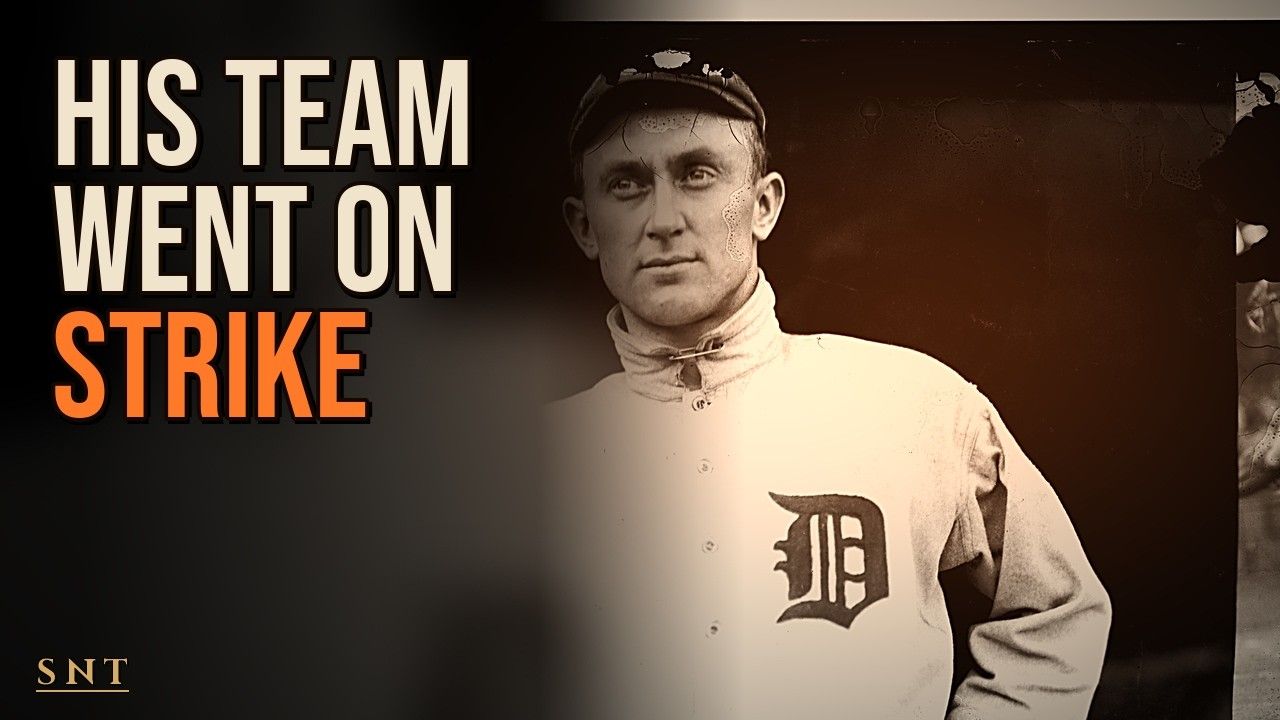
On a Saturday afternoon in May 1912, the Detroit Tigers took the field in Philadelphia. Then the umpires told their best player to leave. He walked off. And the whole team walked off behind him.
That afternoon, a team of college boys and old scouts wore their uniforms instead, and lost 24 to 2. The player was Ty Cobb. Three days earlier, he had climbed into the stands in New York and beaten a man who had lost one hand and most of the other.
The fourth inning at Hilltop Park, May 15, 1912
On Wednesday, May 15, 1912, Detroit was in New York to play the Highlanders. According to the Washington Times, Cobb had been trading words with fans in the bleachers all afternoon. In the fourth inning, he lost his head. He went over the low fence into the stands and went after the man he picked out as his chief tormentor.
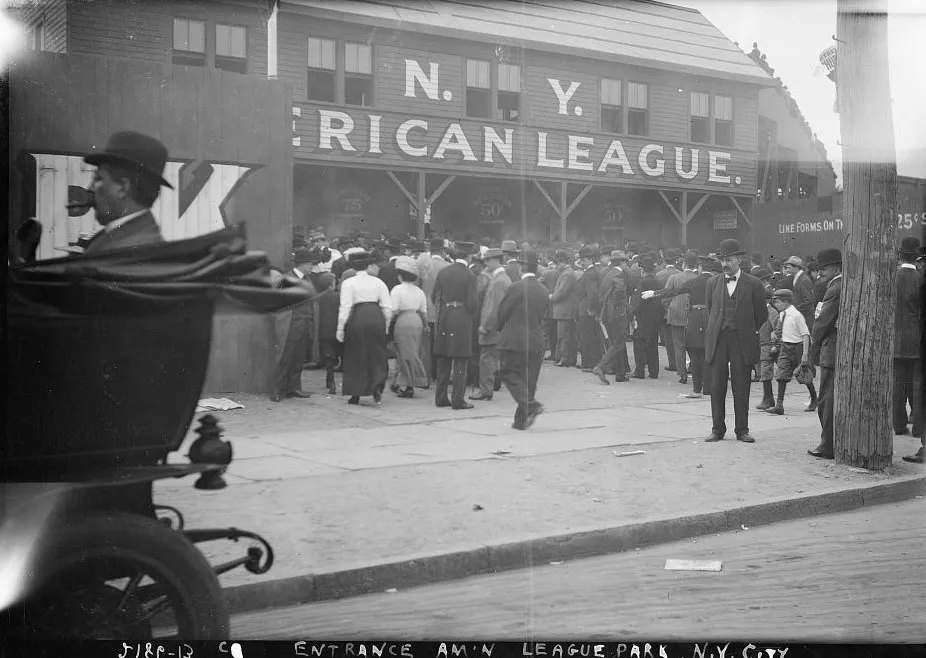
Hilltop Park, New York, 1912, where the fight happened. Bain News Service, Library of Congress.
The Times said the fan was badly beaten. The Evening Star said he had to be half carried to a doctor. A crowd gathered around Cobb, and the Times said some of them meant to give him a dose of the same medicine. Players from both teams and the umpire, Westervelt, pulled him out, and he was thrown out of the game. The Star said Cobb came away with only a damaged hand. He had cut his fingers on the man’s teeth. The man refused to give his name, the Star said. Detroit won the game, 8 to 4.
Claude Lueker, the man in the stands
The man in the stands was Claude Lueker. The Evening Star described him as a former pressman who had lost one hand and most of the other a little more than a year before, at his trade. Lueker gave his side of it to the papers. “I was sitting with some friends just back of third base,” he said. There was a good deal of kidding and booing of Cobb, he said, but nothing out of the way. He said Cobb picked him out and yelled, “Oh, go back to your waiter’s job.” Then, Lueker said, somebody shouted an unpleasant characterization at Cobb. “He hit me in the face with his fist, knocked me over, jumped on me, kicked me, spiked me and booted me behind the ear.” Lueker said he did not want Cobb arrested.
Cobb’s version was shorter. A Connecticut paper reported that he said the man had used vile epithets. The papers did not agree on what the crowd thought. The Bridgeport Evening Farmer reported that a majority of the fans applauded Cobb. The Washington Times reported that many fans sitting near the beaten man were willing to testify that Cobb had given as good as he got, until some particular remark made him lose his head.
Ban Johnson suspends Ty Cobb
The president of the American League, Ban Johnson, was at the game. The Times quoted him: “There is no provocation sufficient to make a player in this league so far forget himself as to leave the playing field, rush into the stands and assault a spectator.” Johnson suspended Cobb indefinitely. The Tigers moved on to Philadelphia, and Cobb went with them, but he was not allowed to play. His teammates sent Johnson an ultimatum: if Cobb wasn’t reinstated, they would not play. Johnson wired back from Cincinnati, “Cobb’s suspension stands.” He said Cobb would stay out until every angle of the case had been reviewed. “As far as I am concerned, that is all. I stand pat, and that’s the last word in the matter.”
Saturday at Shibe Park
On Saturday, May 18, the Tigers arrived at Shibe Park in taxicabs at 2 p.m., put on their uniforms, and went out on the field at 2:30. Cobb was among the first. The San Francisco Call’s correspondent wrote that the crowd recognized him and greeted him with handclapping and whistling. The umpires told Cobb to leave the field. Cobb walked off. The other players picked up their gloves and followed him. According to the Call, the stand rose and applauded them as they went. They got back in their taxicabs and went back to their hotel. This was what the papers called the first big strike in the history of major league baseball.
Philadelphia 24, Detroit 2
Under the league’s rules, a club that refused to play a scheduled game could be fined $5,000. Manager Hughie Jennings had seen it coming and had a team waiting under the grandstand. Most of them were amateurs. According to the Evening Star, many were from the St. Joseph’s College team. Two of the club’s scouts, Joe Sugden and Jim McGuire, both old major league catchers, played too.
The Detroit pitcher was a young man named Travers. The Star said he could do little but float the ball up to the plate. Eddie Collins had five hits and stole four bases. Philadelphia won, 24 to 2. The Star put the crowd at 20,000, and said it took the whole thing as a joke.
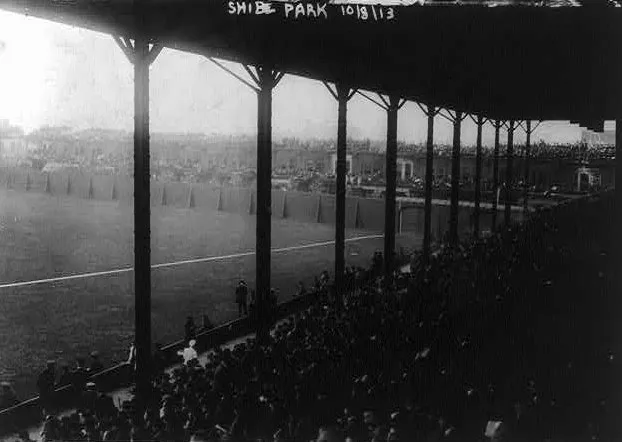
Shibe Park, Philadelphia, about 1913, where the replacement Tigers lost 24 to 2. Library of Congress.
Who runs the league
The Call reported that Cobb was deeply affected by what his teammates had done. “They are the bulliest lot of fellows in the world,” he said. “It brings my heart up into my throat to see the manner in which they stood together in this matter.” He also said, “The fight which Detroit is making is for a principle. The American League has no right to punish a player without giving him a fair trial first.”
The players hadn’t struck because Cobb was punished. They had expected a fine, or a few days’ suspension, and objected to an indefinite suspension handed down before any investigation. One player told the Call it was as good a time as any “to find out whether Ban Johnson owns us body and soul.” Jennings said he was afraid “it will go hard with the players, in spite of the fact that they feel they were fighting for principle.”
Connie Mack, who managed the Athletics, said every ball player had to listen to that sort of abuse, but “there are better ways of meeting such an attack than to go into the grandstand and attack the offender.” Detroit’s president, Frank Navin, arrived in Philadelphia on Monday, saw Ban Johnson, then told his players, “It is now a question whether the club owners are to run the league or the players are to run it.” One account said Cobb appealed to them to go back without him. According to Jennings, Navin said, “I am getting the worst of it, and I want you back in uniform.” The players said they were sorry for him, but they had taken a stand. Monday’s game was called off by agreement. Johnson said every Detroit player who had refused to play stood suspended, and that if it came to it, he would put a whole new team on the field for Detroit.
Back in uniform
In the end, the strikers missed one game on the field. On Tuesday, May 21, the league’s owners met in Philadelphia and fined each Detroit player $100, $50 for each of the two days they had refused to play. Navin had promised to pay the fines himself if they went back. Cobb was ordered to send the league a sworn statement of what had happened in New York, and Johnson left to collect statements from the man Cobb had attacked. The owners also agreed to put more police in their ballparks.
On May 25, ten days after the fight, Ban Johnson reinstated Ty Cobb and fined him $50. He promised full protection to all players, said the league had arranged to increase the police force at every park, and warned that severe punishment would come to any player who would “assume to act as judge and avenger of real or fancied wrongs while on duty.”
After the 1912 Detroit Tigers strike
Cobb missed ten days. His teammates missed one game and were fined $100 each, a fine their owner said he would pay. Lueker, the Star reported a few days after the fight, was still under a doctor’s care, and his lawyer was looking into suing Cobb for damages. The papers never settled what was shouted in the fourth inning. Lueker said he heard nothing out of the way. Cobb said vile epithets. The Times called it some particular remark.
Ty Cobb went into the stands after a man who had lost one hand and most of the other, and his teammates went on strike for him. Were they standing up for a principle, or for the wrong man?
From the archive Sources
- The Washington Times, May 16, p. 12
- Evening Star (Washington), May 16, p. 18
- The Bridgeport Evening Farmer, May 16, p. 8, and May 18, p. 1
- Evening Star, May 18, p. 2 (Lueker; Georgia telegram)
- Evening Star, May 19, pp. 1, 2 and 59 (the strike, Lueker's account, the 24-2 game)
- The San Francisco Call, May 19, p. 63
- The Washington Times, May 19, p. 16
- Evening Star, May 20 and May 21, p. 1 (Navin; the fines)
- The Detroit Times, May 22, p. 8
- Albuquerque Morning Journal, May 26, p. 3 (reinstatement)
More stories like this
1913·Marquette, Michigan
He Gets Drunk Too: Theodore Roosevelt's 1913 Libel Trial
1918·Cloquet, Moose Lake, and Duluth, Minnesota
Cloquet Fire 1918: Minnesota's Deadliest Day
1904·Cleveland and Oberlin, Ohio
Cassie Chadwick: The Woman Who Posed as Carnegie's Daughter
1899·Kansas City, Missouri
Jesse James' Son Was Tried for Robbing a Train. His Grandmother Was the Alibi (1899)
1916–1939·San Francisco, California
The Photograph That Couldn't Save Tom Mooney (1916)
1922·Denver, Colorado